What Architectural Arches Represent
When we walk beneath the shadow of a Roman aqueduct or stand in the nave of a Gothic cathedral, we are not merely observing structural engineering; we are reading a language carved in stone. Different architectural arches represent more than just a method for spanning space without collapsing. They serve as tangible markers of cultural identity, technological advancement, and aesthetic philosophy. For designers, historians, and creative professionals, understanding these forms offers a profound toolkit for communication and visual storytelling.
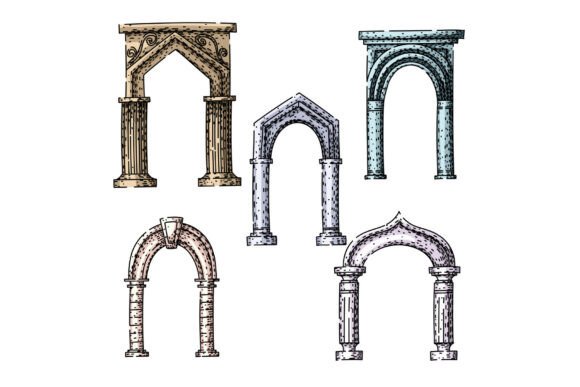
The study of various decorative architectural arches and columns showcasing historical design elements allows us to create a curated collection of stone structures from different ancient eras. This is not simply an academic exercise. It is a practical resource for anyone looking to infuse modern projects with timeless authority, balance, and beauty. Whether you are an architect restoring a heritage site, a game designer building immersive worlds, or a marketer crafting a brand identity rooted in stability, the arch provides a versatile vocabulary.
Decoding the Symbolism of Structural Forms
To leverage these elements effectively, one must first understand what they signify. The round arch, synonymous with Roman engineering, represents order, strength, and imperial power. Its semi-circular form distributes weight evenly, allowing for massive, enduring structures. In contrast, the pointed arch of the Gothic era directs weight downward more efficiently, enabling soaring heights and larger windows. This shift represents a move toward light, spirituality, and vertical aspiration.
Then there is the horseshoe arch, prevalent in Islamic architecture, which symbolizes continuity and infinite flow. The Tudor arch, with its flattened curve, speaks to domestic comfort and transitional medieval styles. By recognizing different architectural arches represent distinct historical narratives, creators can select forms that align with the emotional tone of their work. A financial institution might choose the robust Romanesque round arch to convey security, while a wellness center might opt for the organic, flowing lines of Moorish designs to promote calm and openness.
Enhancing Visual Communication and Brand Identity
In marketing and branding, visual cues trigger immediate subconscious associations. Incorporating various decorative architectural arches and columns showcasing historical design elements into logos, packaging, or digital interfaces can elevate a brand’s perceived value. Columns, particularly those following the Classical orders—Doric, Ionic, and Corinthian—add layers of meaning. Doric columns suggest rugged simplicity and strength; Ionic columns imply wisdom and balance; Corinthian columns evoke luxury and intricate detail.
Consider a boutique hotel aiming to position itself as a sanctuary of classic elegance. By integrating subtle references to Corinthian capitals in their interior design or using arched doorways in their photography, they communicate luxury without saying a word. This approach saves time in customer education because the visual language is already universally understood. The audience instantly recognizes the quality and tradition associated with these forms, strengthening the brand’s message through established cultural codes.
Supporting Creativity in Digital and Physical Design
For digital creators, such as video game developers and virtual reality artists, accuracy in historical design enhances immersion. Creating a believable ancient world requires more than generic stone textures; it demands specific architectural logic. Using a collection of stone structures from different ancient eras as a reference ensures that environments feel authentic. A player exploring a Byzantine-inspired city expects to see pendentive domes and rounded arches, not Gothic spires. Attention to these details builds trust with the audience and deepens engagement.
Similarly, interior designers and architects can use these historical elements to solve spatial problems. Arches can define zones within an open-plan living area without blocking light or sightlines. A well-placed archway creates a sense of procession and importance, turning a simple hallway into a grand entrance. By studying how ancient builders used columns to support heavy loads while creating rhythmic visual patterns, modern designers can apply these principles to contemporary materials like steel and glass, achieving a blend of old-world charm and modern efficiency.
Practical Applications for Educators and Historians
Educators teaching art history, architecture, or civil engineering benefit greatly from tangible examples. Abstract concepts about load distribution or cultural diffusion become clear when students can compare the thick walls required for Roman round arches against the skeletal frameworks of Gothic cathedrals. Presenting different architectural arches represent specific technological leaps helps students grasp the evolution of human ingenuity.
Museums and cultural institutions can use interactive displays featuring various decorative architectural arches and columns showcasing historical design elements to engage visitors. Instead of static plaques, imagine a digital kiosk where users can manipulate virtual columns and arches to see how changing the shape affects structural integrity. This hands-on approach simplifies complex engineering principles, making them accessible to a broader audience. It transforms passive observation into active learning, supporting educational goals more effectively than text alone.
Navigating Limitations and Contextual Fit
While historical architectural elements offer rich symbolic value, they are not universal solutions. Misapplication can lead to pastiche or cultural insensitivity. For instance, using sacred Islamic geometric patterns or specific religious architectural forms in a commercial context without understanding their significance can be offensive. It is crucial to research the origins and meanings behind each element.
Additionally, modern building codes and material constraints may limit the direct replication of ancient techniques. Stone masonry is labor-intensive and expensive. However, modern manufacturing allows for high-quality replicas using lighter materials like fiberglass or polyurethane. Designers must weigh the aesthetic benefits against budget and maintenance requirements. In some minimalist contemporary designs, heavy ornamental columns may clash with the clean lines, disrupting rather than enhancing the visual harmony. Always consider the overall design language before integrating historical motifs.
Building a Timeless Design Vocabulary
Ultimately, mastering the language of arches and columns empowers professionals to make more informed design decisions. It allows for a deeper connection with audiences who respond to familiar, comforting forms. By curating a mental library of stone structures from different ancient eras, you equip yourself with tools that transcend trends. These elements have survived for millennia because they work—structurally, aesthetically, and psychologically.
Whether you are drafting a blueprint, designing a website header, or writing a historical novel, let different architectural arches represent the foundation of your creative process. Use them to anchor your work in tradition while reaching for innovation. The next time you face a design challenge, look to the past. The solutions, and the stories, are already there, waiting in the curve of an arch and the strength of a column.