Mastering the Art of Digital Elegance: A Guide to White Ornamental Flat Vector Lace Borders
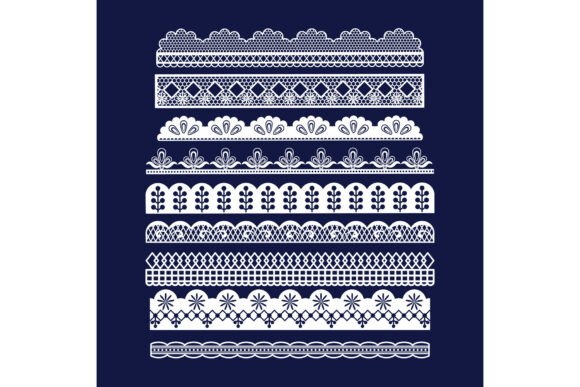
In the vast landscape of digital design, few elements convey sophistication and timeless beauty quite like lace. For centuries, lace has been a symbol of luxury, intricacy, and delicate craftsmanship. However, in the modern era of graphic design, we do not always need physical thread and needles to achieve this aesthetic. Enter the white ornamental flat vector lace border, a digital asset that bridges the gap between traditional artistry and contemporary efficiency. This collection of decorative trim patterns is not merely a set of images; it is a versatile toolkit for designers, crafters, and business owners looking to elevate their visual communication.
Understanding how to effectively utilize these vector assets requires a shift in perspective. We must move beyond viewing them as simple clipart and start seeing them as foundational design elements that can define the tone of a project. Whether you are designing a wedding invitation suite, creating a textile pattern for fashion, or adding a touch of class to a corporate brochure, white ornamental borders offer a clean, adaptable solution. This article explores the significance of these assets, their technical advantages, and practical applications in various creative fields.
The Technical Advantage: Why Vector Matters
Before diving into the artistic applications, it is crucial to understand the technical superiority of vector graphics over standard raster images (like JPEGs or PNGs). A common misunderstanding among beginners is that all digital images are created equal. They are not. A raster image is made of pixels; when you enlarge it, it becomes blurry or pixelated. A vector image, however, is defined by mathematical equations. This means a white ornamental flat vector lace border can be scaled from the size of a postage stamp to the size of a billboard without losing a single detail of its intricate curves and loops.
This scalability is vital for professional work. Consider a designer who creates a logo or border for a small business card. If that client later wants to use the same design on a large banner for a trade show, a raster image would fail. A vector file ensures consistency and quality across all mediums. Furthermore, "flat" design refers to a style that minimizes three-dimensional effects like shadows and gradients, focusing instead on clean lines and solid colors. This makes white lace borders particularly effective because they remain crisp and legible even when printed on textured paper or displayed on high-resolution screens.
Key Benefits of Using Vector Lace Borders
- Infinite Scalability: Resize without quality loss, ensuring sharp edges at any dimension.
- Editability: Individual paths and nodes can be adjusted, allowing you to customize the density or shape of the lace.
- Small File Size: Vector files are typically lighter than high-resolution photos, improving website load times.
- Color Flexibility: While these are white borders, they can be instantly recolored to match any brand palette or background.
Elevating Event Stationery and Wedding Invitations
One of the most popular applications for a white ornamental flat vector lace border is in the realm of event stationery, particularly weddings. The wedding industry thrives on aesthetics, and couples often seek designs that reflect romance, tradition, and elegance. Lace is inherently associated with bridal wear, making it a natural choice for invitations, save-the-dates, and menu cards.
Using digital vector lace allows stationers to offer high-end looks at a fraction of the cost of physical lace appliques. For example, a designer can place a delicate white lace border along the edge of a deep navy blue invitation. The contrast creates a striking visual impact that mimics the look of expensive embossing or foil stamping. Moreover, because the files are vectors, the printer can produce crisp lines even on thick, textured cardstock, which is preferred for premium invitations.
Beyond just the border, these elements can be used to frame text, separate sections of information, or create watermarks. The key is subtlety. Overusing ornate patterns can clutter the design and make the text hard to read. By using a flat vector style, the design remains clean and modern, avoiding the "dated" look that sometimes accompanies overly complex digital lace.
Applications in Textile Design and Fashion
While digital design is often associated with screens, its influence on physical products is profound. Textile designers frequently use vector patterns as the basis for fabric prints. A collection of white ornamental flat vector lace borders can be tiled, rotated, and combined to create seamless repeating patterns for clothing, home decor, and accessories.
For instance, a fashion brand might use these borders to create a print for a summer scarf or a lining for a jacket. The "flat" nature of the vector ensures that the print translates well to screen printing techniques, where distinct color separations are necessary. Additionally, interior designers might use these patterns for wallpaper designs or curtain trims. The ability to manipulate the vector paths allows designers to adjust the scale of the lace to suit different fabrics, from sheer chiffon to heavy velvet.
It is important to note that while the digital file is white, the final product’s color depends on the printing process. Designers often use these white vectors as masks or stencils, applying them over various background colors to simulate the appearance of white lace on colored fabric. This versatility makes the collection an invaluable resource for anyone involved in surface pattern design.
Crafting and DIY Projects in the Digital Age
The rise of consumer cutting machines, such as Cricut or Silhouette, has revolutionized the crafting world. Hobbyists no longer need to buy pre-made lace trims; they can create their own using digital files. A white ornamental flat vector lace border is perfectly suited for this purpose. Crafters can import these vectors into their cutting software and cut them out of vinyl, paper, cardstock, or even thin wood.
This opens up a world of possibilities for personalized gifts and home decor. Imagine creating a custom wedding guest book cover with laser-cut lace details, or designing intricate paper doilies for a vintage-themed party. The precision of vector files ensures that the cutting machine follows every curve accurately, resulting in professional-looking results even for beginners.
- Select the Border: Choose a pattern from the collection that matches the complexity of your material.
- Resize and Arrange: Adjust the vector to fit your project dimensions within the software.
- Material Settings: Ensure your cutting machine is calibrated for the specific material (e.g., cardstock vs. vinyl).
- Cut and Apply: Execute the cut and carefully apply the lace design to your project surface.
Best Practices for Integration and Design Harmony
To truly master the use of these decorative elements, one must understand design harmony. A common mistake is treating the lace border as an afterthought, slapped onto a finished design. Instead, it should be integrated from the beginning. Consider the white space in your layout. Ornate borders require breathing room to be appreciated. If the text is too close to the intricate loops of the lace, the design will feel cramped and chaotic.
Furthermore, consider the context of the background. White lace on a white background is invisible, obviously, but white lace on a busy photographic background can get lost. These borders work best on solid colors, subtle gradients, or textured backgrounds that provide enough contrast. If you must place them over a photo, consider adding a semi-transparent overlay behind the lace to ensure it stands out.
Another critical aspect is consistency. If you are using a Victorian-style lace border, ensure that the fonts and other graphical elements match that era’s aesthetic. Mixing a highly ornate, historical lace pattern with a ultra-modern, sans-serif font can create a jarring disconnect unless done with intentional artistic irony. For most educational and professional purposes, maintaining stylistic coherence leads to a more polished and trustworthy final product.
Conclusion: Embracing Digital Craftsmanship
The white ornamental flat vector lace border collection is more than just a set of decorative lines; it is a testament to how technology can preserve and enhance traditional artistic forms. By understanding the technical benefits of vector graphics and applying thoughtful design principles, creators can unlock new levels of elegance in their work. From the intimate detail of a wedding invitation to the bold statement of a textile print, these borders offer a flexible, high-quality solution for modern design challenges.
As you explore these resources, remember that the goal is not just to decorate, but to communicate. Let the intricacy of the lace speak to the care and attention to detail inherent in your project. Whether you are a seasoned graphic designer or a passionate DIY enthusiast, mastering these tools will empower you to create visuals that are not only beautiful but also meaningful and professionally executed. Embrace the blend of old-world charm and new-world technology, and let your creativity flourish within the delicate bounds of digital lace.